The rest we can leave for tomorrow
The blues arrived in Barcelona like someone late to a party: unhurried, but with an elegance nobody could ignore. It was a warm night in 1953 and Big Bill Broonzy, one of the most emblematic figures of this musical genre, was climbing onto the stage of the C.A.P.S.A. theatre in the Catalan capital with his amplified guitar and his torn voice. It was a concert that few remember having witnessed (memory is fragile in times of dictatorship), but whose legend has grown greater with the passing of the decades and which today still inspires all the local enthusiasts who understand that the blues, more than a musical style, is a way of inhabiting this world, so incongruous and thrilling, that we have inherited, generation after generation, chord after chord.
Curiously, photography arrived in Barcelona much earlier, and with a certain urgency, after its invention. In 1839, the first daguerreotypes began to capture the outlines of a city which, like the blues, had to learn to reinvent itself with every new urban plan, with every backlight that dazzled the eyes of people who did not understand where society was heading, and with every shadow cast by the new times that would end up succumbing to the arrival of the electric tram (let us be honest, not that many things have changed either). Ever since, the two art forms, music and image, have evolved in parallel, capturing the stories, the emotions and the persistent battle between melancholy and hope, between what is modern and what is traditional, a battle that remains alive in the digital universe we inhabit today.
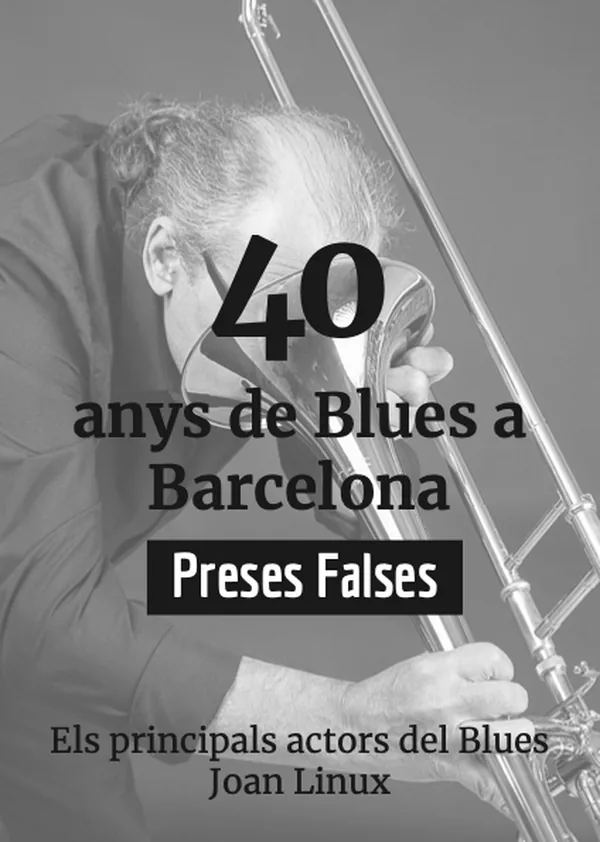
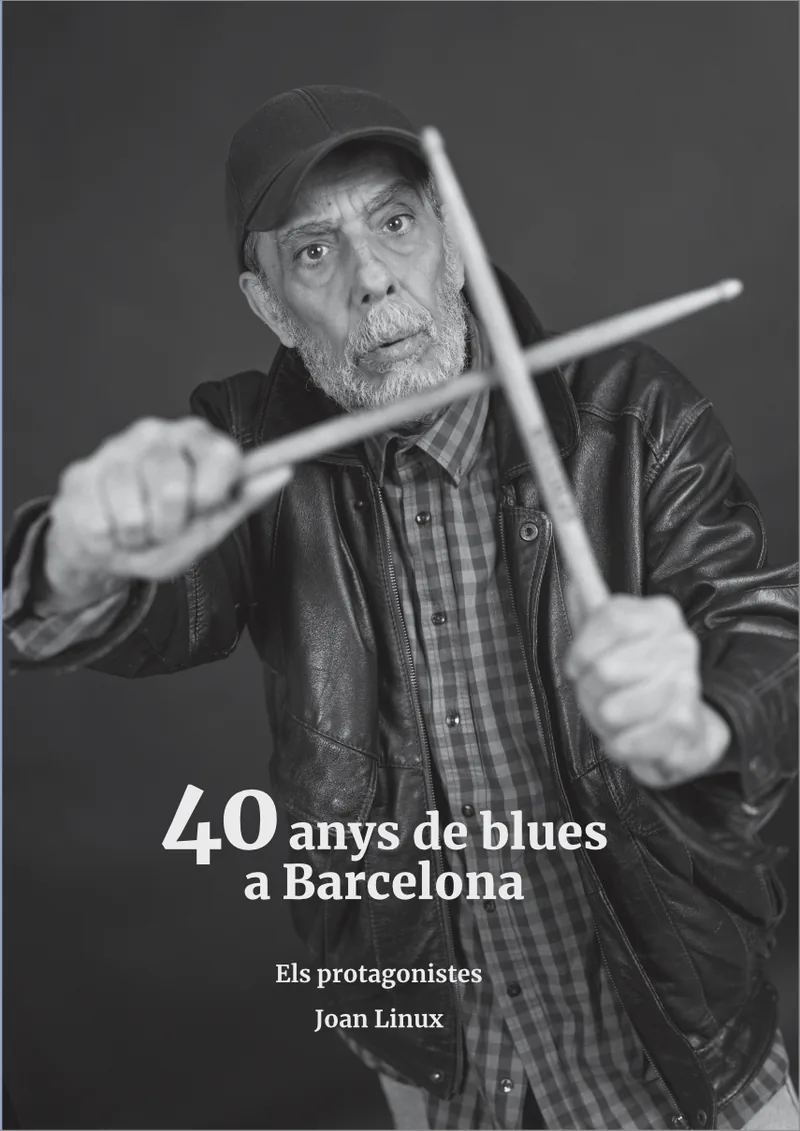
When I was asked to write this foreword, the first thing I thought was that, beyond the love of music that comes through on every page, this is a work that bridges two worlds which have travelled hand in hand for decades and which today are inseparable, like those endearing elderly couples who live in an old rent-controlled flat and still stroll along the Rambla holding hands, oblivious to the bustle of tourists who pass along the same route without empathy. More than a book, “40 anys de Blues a Barcelona” is an archive of faces, of subtle gestures, of knowing glances and of enthusiastic souls who have devoted their lives to preserving the spirit of this musical genre in Barcelona. Born of the passion of the photographer Joan Linux, what began as a personal project during the months of the pandemic has become a collective testimony, a mirror of how our city has embraced and shaped this music for more than forty years, until it turned it into the soundtrack of many memorable nights that are barely distinguishable from one another, even though we remember them all perfectly.
We have to accept it: the blues is a fascinating paradox. That is why you and I meet on these pages. As a journalist, I always say that it is a journey through time and a puzzle that defies fashions and trends. In essence, it is still a music born of the resistance of the African American community in times of racial segregation, of the work songs on the cotton plantations and of the chords played on the dusty porches of the Mississippi Delta. But on reaching Barcelona, it found new echoes in the bohemia of the Barri Xino, in the bars of Ciutat Vella and on the small stages (such as La Cova del Drac and La Boîte) that have witnessed endless nights of passionate music and decibels. Some musicians were inspired by the records imported by sailors and tourists; others made pilgrimages to Memphis, Chicago or New Orleans to absorb the spirit of the masters. Back in Barcelona, all of them built a scene which, like a good old recording, is improvised yet profoundly connected, and which still has a great deal to say to those willing to pay attention.
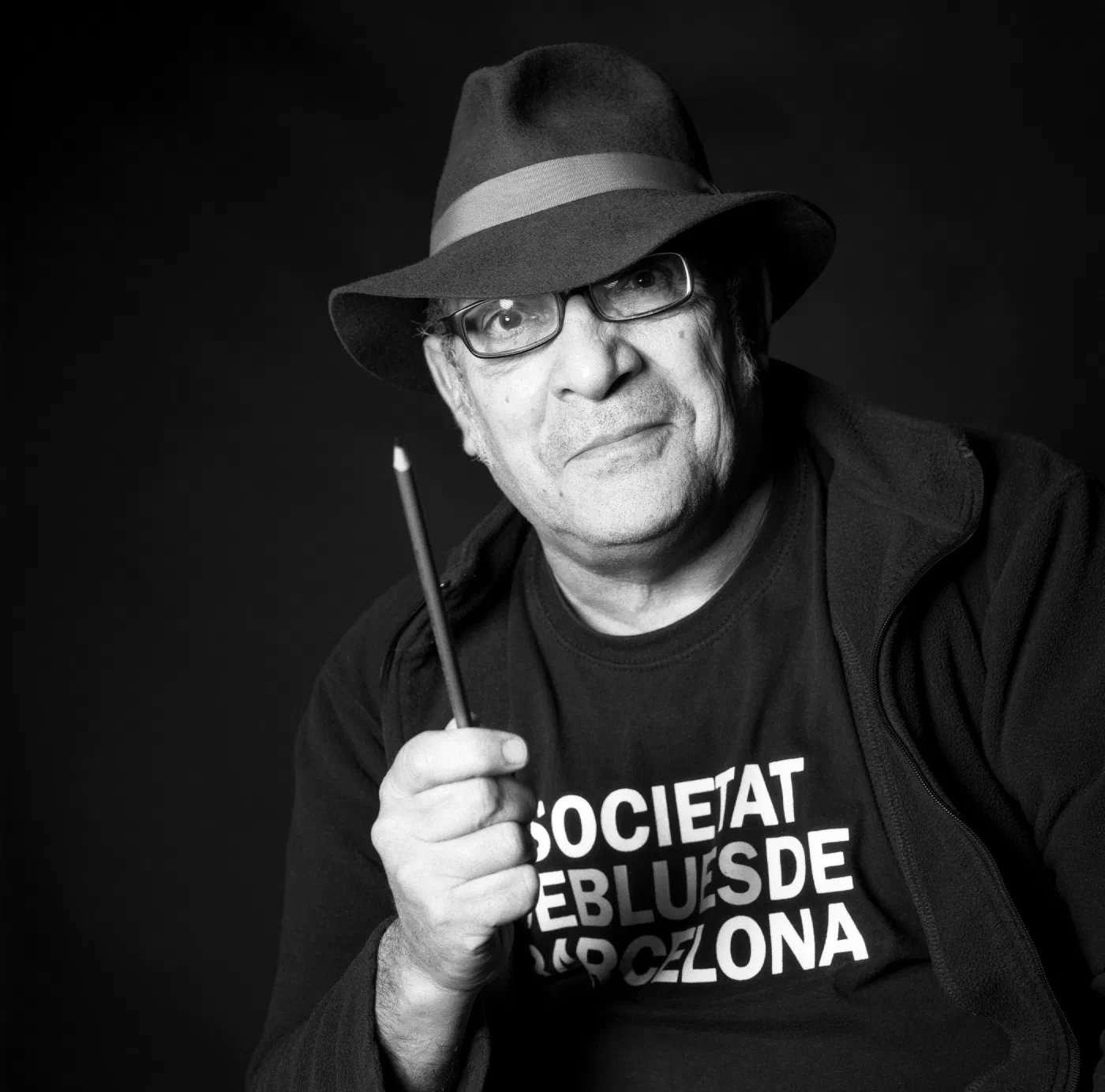
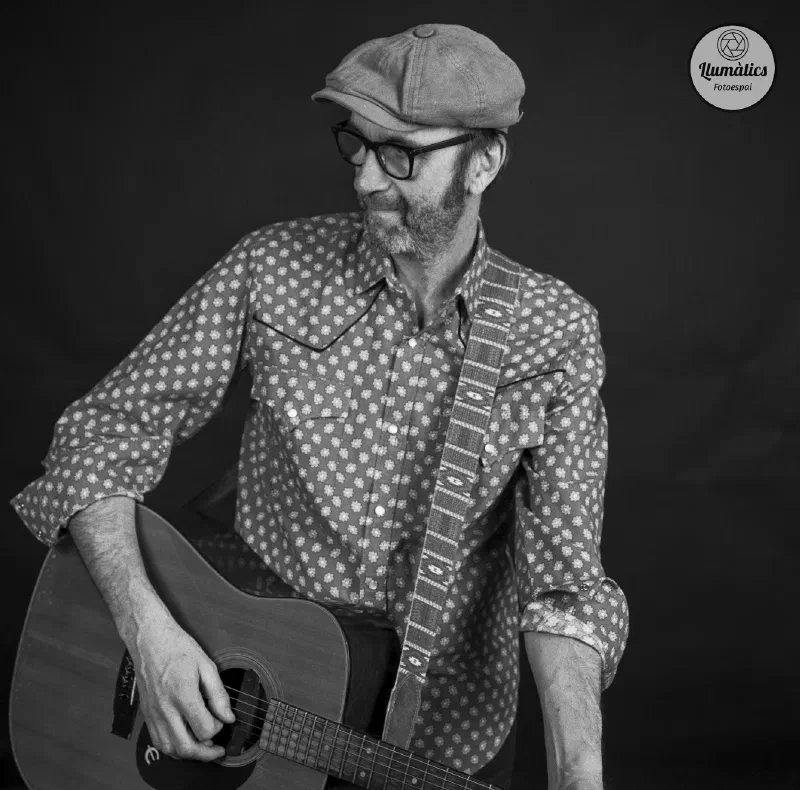
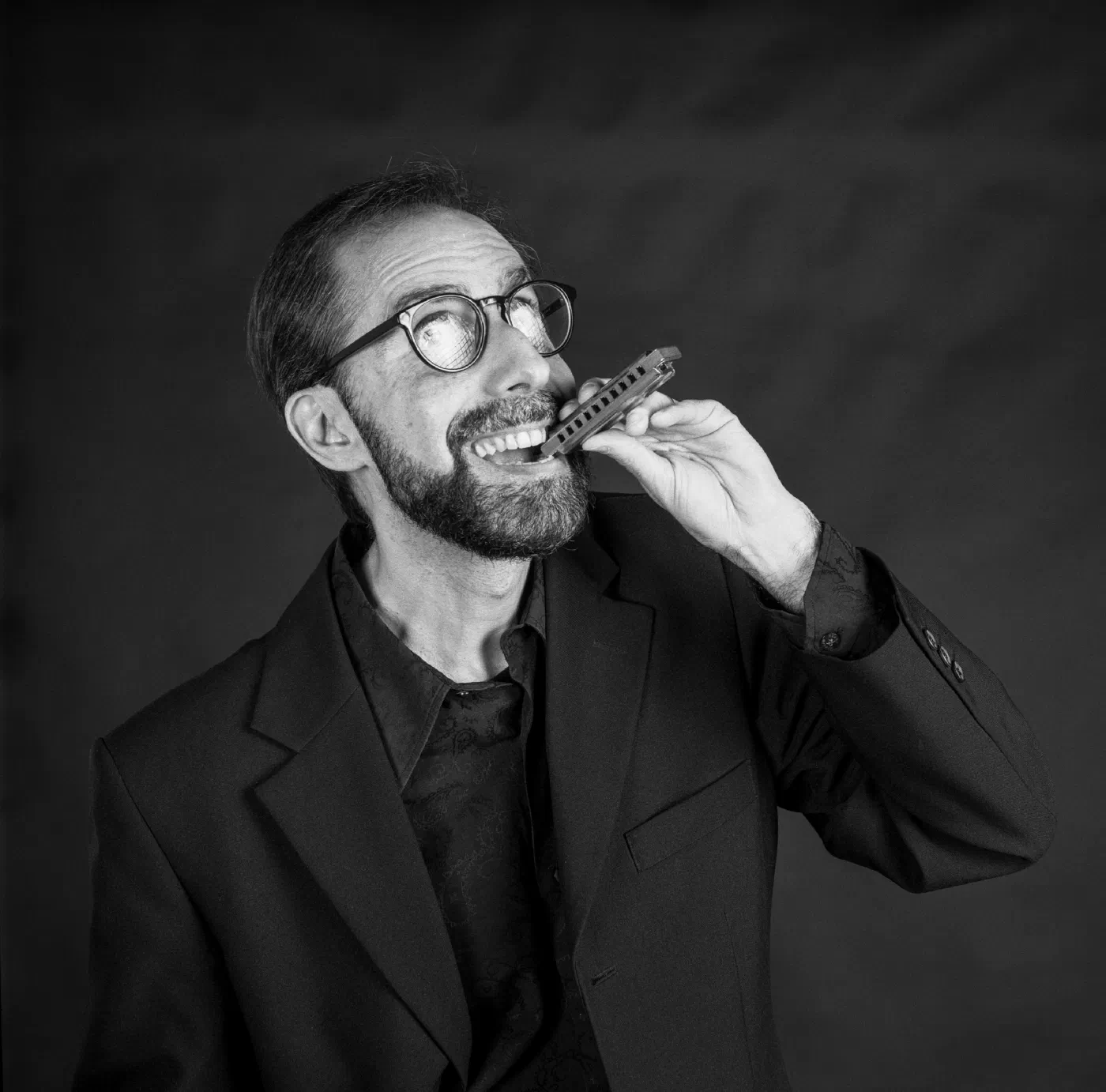
Joan Linux, the eye hidden behind the photographs in this book, has been a privileged witness to this evolution. Over the years, his camera has captured not only the faces of the musicians but also the stories that run through them. Each portrait is a window onto a world of its own, but also a reflection of something greater. The diversity of styles it embraces (from rural to urban blues, from swing to rock-blues and even jazz) is clear evidence of the way this music has been adopted, reinterpreted and enriched in the alleys of our city. More than a chronology of veteran musicians and others newly arrived, this book is an emotional map, a kaleidoscope of the dreams, the struggles and the passion that have kept the blues alive in Barcelona for four decades in which the city has several times shed its incongruous skin, burnt by the Mediterranean sun, yet always holding clear reference points that have worked as a compass for finding the Deep South whenever the North seemed too sophisticated for its way of understanding music and life.
Writing about the blues in Barcelona also means writing about a city that does not give in. Just like this centuries-old genre, Barcelona is a blend of tradition and innovation, even of resistance of the local in the face of the invasion of the global (forgive the incongruity with the subject of the blues). Every night a band or an artist takes to a stage and reinterprets that tradition (whether with versions of classics or with original numbers), a story is told that connects the past with the present and, with a little luck, also with the future we dream of when we close our eyes and let ourselves be carried away by the suggestive melodies drifting in the air.
And this is where we truly find Joan Linux’s merit as a photographer, because this book celebrates not only the bluesmen and blueswomen of Barcelona, but also the people who have made it possible, from the trenches of cultural activism, for the devil’s music to take deep root in our city and to grow like a beautiful baobab on the bank of a river. For those venturing into this genre for the first time, “40 anys de Blues a Barcelona” will be an invitation to connect with a scene which, to paraphrase Kerouac, “burns, burns like fabulous yellow rockets exploding like spiders among the stars”. For those who already carry the blues in their soul, it will be a mirror in which to find themselves again. And for everyone, it will be a reminder that the blues, like Barcelona, never stops reinventing itself. So come in, look, listen and let this centuries-old music do the work. The rest we can leave for tomorrow.
David Moreu